Magnifica Robotica
The Pope has written an Encyclical Letter, Magnifica Humanitas, on safeguarding the human person in the time of Artificial Intelligence.
The letter covers concepts such as a technocratic society, warfare, and what it is to be human.
Because we are a company that makes software for drones, and AI is used throughout drone technology, we thought we had better read and comment upon the letter.
It is significant that the Pope has chosen to write about AI and the changes that it brings for society. We think it is an appropriate subject and a good moment to call upon the world to reflect. The letter is 43,600 words long, so reading it is no meagre undertaking. Of course, you could just ask ChatGPT to summarise it for you. Who has the time or the energy to read a Papal Encyclical 43,600 words long? It is preposterous! We have machines for this; we can spare our brains the labour of reading. We are barely separable from our phones. We do not need to work at this letter; almost everyone who reads anything at all about the encyclical will choose to read the ChatGPT summary. That choice is, in a sense, the very point of the letter. The letter is a call to reflect upon the idea that AI is changing the essence of "being human". We increasingly think, remember, and create in partnership with machines. We are all cyborgs now.
Pope Leo uses two biblical stories to help illustrate his point:
- The Tower of Babel
- The rebuilding of Jerusalem
Here is an AI reminder of what those stories are (this saved on going to the library and looking up the Bible):
The Tower of Babel is a story from the Book of Genesis in which humanity, speaking one language, builds a great tower to reach the heavens and make a name for itself. God sees their pride, confuses their language so they can no longer understand one another, and scatters them across the Earth.
The story is commonly understood as a warning against human arrogance and an explanation for the diversity of languages and cultures.
The second story is the rebuilding of Jerusalem. Jerusalem had been destroyed in a war. Under the leadership of Nehemiah, the city walls were rebuilt. Practically speaking, no walls mean no city, and no city means no temple and no shared life or common purpose.
Is AI an arrogant, sinful Tower of Babel, serving only hubris, or is it an inclusive city for the good of all humanity? What are we building?
The rebuilding of Jerusalem is more grounded. It is not about one tower, one elite group, or one centralised vision of the future. It is about rebuilding something broken through shared responsibility. That is a much better metaphor for what technology should be: not a race to dominate the future, but a process of repair, care, and building the common good.
There is a sense that it is all too late. Autonomous warfare is already here. To observe any phenomenon, it must already exist, and if it exists already, it is, at least to some extent, too late to alter its path. But to think that way is to lose hope, and we must not allow that. The future is in our control, and we must be hopeful and determined enough to shape it. We think that is the message in the letter.
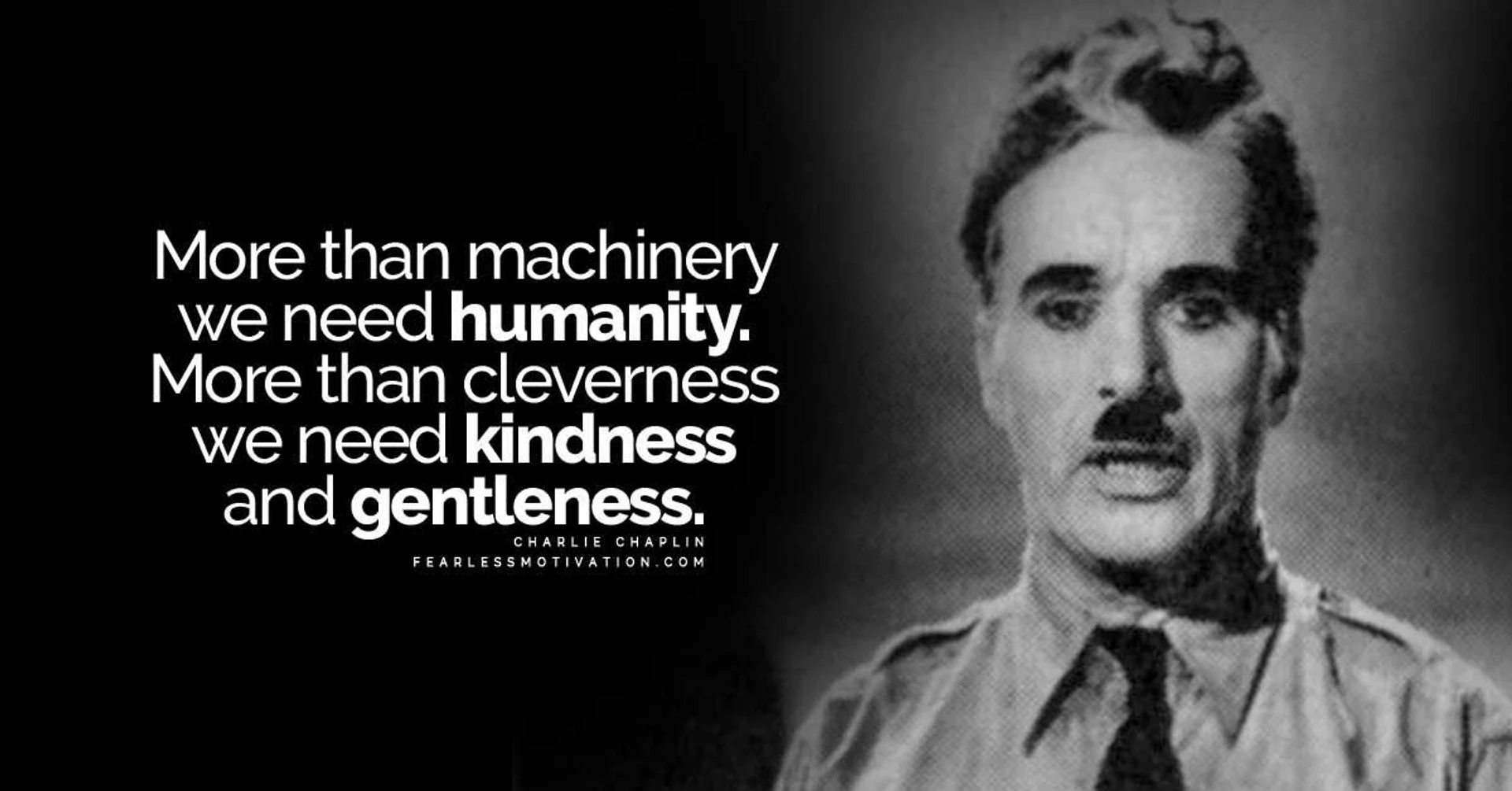
There is a phrase in the letter which stood out for us: "a cog in the machine" (para 180). That phrase, we suspect, has entered social consciousness. We wondered where the original source for "a cog in the machine" comes from. It is probably a very old reference, but it reminded us of Charlie Chaplin's film Modern Times and the speech in The Great Dictator. We re-played the speech and re-read the encyclical and feel that a lot of what the Pope is saying is captured in that speech.
"Don't give yourselves to these unnatural men - machine men with machine minds and machine hearts! Don't fight for slavery! Fight for liberty!"
17/06/2026 AH & JMH